

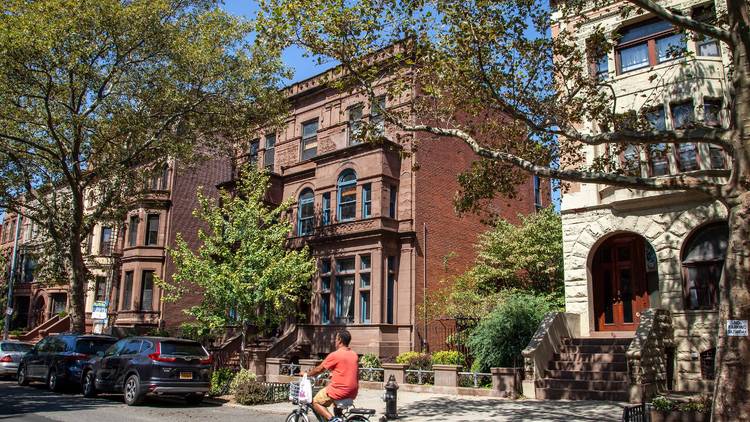
A recent news article highlights Bed-Stuy gaining 30k white residents and losing 22k black residents. In most popular discourse it blames white people which to be fair is reasonable… but do they cover the entirety of the blame?
Gentrification is the new hot topic in urban issues and problems. Even on popular media, it’s a hot buzzword. But what does gentrification actually mean? I think even scholars are confused about the definition and does the dictionary definition encompass the entire issue. The definition of gentrification was first classified by Ruth Glass in 1964 to describe a working-class town in London but the concept has expanded past those borders and has received international attention.
Living in NYC you hear the term everywhere to describe everything. As New York City is going through a housing crisis and with the rising rents it’s causing many people to be concerned, even the middle to the upper middle class. High-rise apartments seem to go up every other day in the city.
Viewing gentrification from an individualist perspective neglects the role that government, real estate, and the prioritization of capital have on cities. New York City is not only driven by the neglect of the state on affordable housing. But the city allows real estate development to get priority on land use and pay their way out of zoning/height limitations.
Included in this is the use of green spaces as ways to upzone which plays on the fact that the government is relying more and more on private companies to handle public goods. As well as public housing is no longer provided by the state but by private real estate instead through mandatory “affordable housing” units in luxury high rises.
Why wouldn’t the government allow the increased prioritization for real estate as land is becoming more of a rare commodity, as well as the possession of the property, is becoming more limited, it has now become so much more liquid. The developers gain capital and the local government gains capital through higher tax rates.
The more upsetting thing is how much the state and local government does not provide for us but works to benefit the state and power. Public goods are no longer handled and managed by the state because they simply do not have the means compared to private entities. Similar to why even public investment is more signs of increasing displacement and wealth rather than a public good that will benefit the residing community.
 brain mush